
Sunday, 18 October 2026
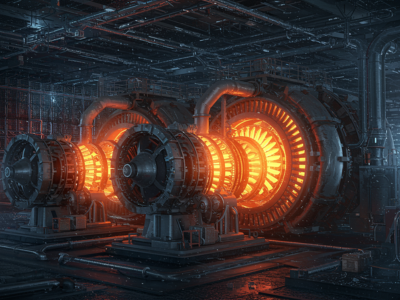
What if the real limit to AI growth is not computing power, but electricity itself? As data centers expand at an unprecedented pace, a silent crisis is unfolding, and energy systems are struggling to keep up. The surge in AI-driven demand is exposing deep cracks in traditional power infrastructure, raising a pressing question: Who will power the intelligence revolution? Arbor Energy enters this moment with a solution that feels both urgent and disruptive. Its turbines are not just machines; they represent a shift toward faster, more flexible, and scalable energy systems designed for the AI age.
The timing is critical, and the stakes are rising quickly. As hyperscalers search for reliable power at scale, Arbor’s approach is gaining attention across the industry. In this blog, we will uncover how Arbor Energy turbines are reshaping the future of power in the AI era.
The United States is experiencing one of the steepest increases in electricity consumption in decades. This surge is driven by hyperscale AI data centers, industrial manufacturing, and distributed digital systems. This sudden strain is pushing utilities, developers, and regulators to seek faster, more adaptable power solutions.
Arbor Energy turbines offer a timely answer for the U.S. market. Their modular architecture helps accelerate deployment, giving developers the ability to bring capacity online in years, not decades. This flexibility is invaluable as American data center hubs continue expanding across Virginia, Texas, Ohio, and the Pacific Northwest. Today’s gas turbine market is shifting toward cleaner, distributed, and rapidly deployable power systems, an environment where Arbor’s advanced turbines fit seamlessly.
On March 25, 2026, Arbor Energy announced a landmark agreement with GridMarket to deliver up to 5 gigawatts of zero-emission power starting in 2029. This massive deal involves the potential deployment of up to 200 Halcyon turbines, each capable of delivering 25 megawatts. The agreement is valued in the single-digit billions, marking one of the largest hardware deals in the history of climate technology.
Executives describe the demand as overwhelming, with customers seeking more power yesterday. Timeframes are shrinking, and the scale of projects is intensifying as the digital world expands. The multi-gigawatt deal signals the market’s trust in Arbor Energy’s ability to deliver industrial power solutions for AI workloads, heavy computing, and next-generation infrastructure.
Arbor’s Halcyon turbines rely on rocket turbine technology, borrowing engineering principles from high-performance spaceflight systems. Founded by former SpaceX engineers, the company utilizes 3D printed turbines and advanced machining for its components. This innovative strategy is specifically designed to circumvent traditional manufacturing bottlenecks that currently plague the energy sector.
Key technical advantages of the Halcyon system include:
AI data centers are fast becoming the driving force behind an unprecedented surge in electricity demand. Hyperscale operators are no longer just looking for power; they need it to be constant, immediate, and scalable. This is exactly where modular gas turbines for data centers begin to stand out. Unlike traditional large-frame systems that take years to deploy and struggle with flexibility, modular solutions offer a faster, more adaptive path forward.
Arbor Energy’s approach reflects this shift. Its turbines are designed to support on-site, distributed power systems that keep data centers running without interruption. Pre-assembled units allow for rapid deployment, reducing delays that operators can no longer afford. These systems deliver consistent and predictable energy, a critical requirement for AI workloads that cannot depend solely on intermittent renewable sources. At the same time, their scalable manufacturing model aligns with the growing need for gigawatt-level capacity, ensuring power infrastructure can expand in step with the relentless pace of AI growth.
Originally engineered as biomass power generation turbines, Halcyon units were designed to run on organic materials like crop waste. This biomass-to-syngas process enables carbon-negative energy systems by capturing the recently absorbed CO2 and storing it underground. However, to meet the immediate scale of the AI boom, Arbor has redesigned the units to be fuel-agnostic.
The turbines can now run on natural gas while still maintaining a path to zero-emission operation through integrated carbon capture. Even when using fossil fuels, the system aims for emissions as low as 10 grams of CO2 per kilowatt-hour. This is significantly cleaner than traditional natural gas plants, which typically emit around 400 grams per kWh.
Traditional turbine production is constrained by the difficulty of forging and shaping single-crystal metal blades. Arbor is using 3D printed turbines in the energy sector to sidestep these supply chain chokepoints entirely. By utilizing additive manufacturing, the company can produce components in a fraction of the time required by legacy OEMs.
This approach offers:
Halcyon turbines focus heavily on carbon capture turbine technology. By burning syngas or natural gas with pure oxygen, the exhaust is almost entirely CO2 and water. This makes the separation and sequestration process much simpler and more cost-effective than traditional post-combustion capture.
With carbon reduction now a priority for both public and private sectors, turbines capable of multi-fuel operation with integrated capture are essential. Arbor’s strategy reorients near-term growth toward large-scale industrial clients while maintaining a long-term goal of net-negative energy using sustainable biomass.
As AI workloads surge, centralized grids struggle to keep up with the localized demand of massive data center clusters. Distributed energy systems for data centers offer the stability and independence that today’s digital infrastructure demands. Arbor’s modular turbines allow for on-site generation, reducing the need for expensive new transmission lines.
This decentralization plays a crucial role in the next generation of hyperscale development. By placing 25 MW modules directly at the site of consumption, operators can ensure energy resilience and avoid the gating factor of grid availability. It allows the digital economy to grow at the speed of software, rather than the speed of 20th-century utility planning.
The future of power generation in the AI era is beginning to take a very different shape, quieter, faster, and far more adaptable than anything the industry has relied on before. As AI continues to push infrastructure to its limits, traditional energy models are struggling to keep up with the pace of change. In their place, a new approach is emerging, built on flexibility, distributed systems, and modular design that can scale as quickly as demand rises.
Arbor Energy’s rapid ascent reflects this turning point. The company is not just expanding capacity; it is aligning itself with the speed of the AI revolution. By 2030, Arbor aims to ship more than 100 turbines each year, adding over 1 gigawatt of capacity annually, with a long-term vision of reaching 10 gigawatts of production every year. It is an ambitious target, but one that mirrors the urgency of a world where power is no longer just infrastructure; it is the backbone of intelligence itself.

Preety Shaha is a content writer at The Insight Partners, where she crafts research-backed press releases and market insights across industries. With a passion for storytelling and a sharp eye for detail, she transforms complex data into clear, engaging narratives. Her work empowers professionals to stay informed, make strategic decisions, and navigate fast-changing markets with confidence.

Smarter Decisions with Smart News
Smart Market News is committed to getting its readers the latest updates and insights on industries that help in making “smarter” business decisions. With insights and inputs from corporate decision makers, we bring you the stories of adopting innovative solutions and strategies that have been changing the world. Our editorial insights on products, solutions, companies, and adoption of best practices not only help in understanding the markets better, but also prove to be a complete package for your information needs.
 Can Navan turn travel tech trends into massive 2027 revenue?
  Apple American Manufacturing Program Adds New U.S. Partners