
Sunday, 18 October 2026
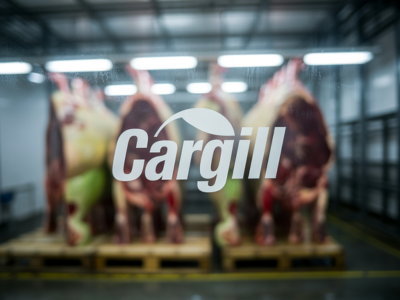
Cargill announced plans to cease operations at its Milwaukee beef plant, and the decision follows months of industry strain. The company confirmed that the facility will stop production around mid-April and fully close toward the end of May. Consequently, workers now face a difficult transition, and local leaders continue to respond. Moreover, the Cargill Milwaukee plant closure highlights broader pressures in the U.S. beef sector.
The plant employs 221 people, and the company filed an official notice with Wisconsin authorities. Additionally, the filing explains that employees will receive advance notice and may explore internal job opportunities. Furthermore, many workers hope for relocation to the nearby Butler facility, which will absorb part of the production shift. The Cargill Milwaukee plant closure now shapes conversations about local employment stability.
City officials reacted quickly, and Milwaukee’s mayor expressed concern for affected families. He emphasized that support agencies will assist workers during the transition. Meanwhile, state workforce teams will coordinate retraining options and employment connections. Moreover, community groups already monitor the economic ripple effects. The Cargill Milwaukee plant closure continues to spark discussions about long-term regional growth.
The company stated that the decision aims to align its portfolio with current customer demand. In addition, executives said they plan to prioritize investments in more efficient facilities. This shift reflects evolving market conditions, including high operating costs and fluctuating cattle supplies. Moreover, industry analysts note that cattle herd declines influence many closures nationwide.
Recent drought conditions reduced available livestock, and meatpackers now face rising purchase costs. As a result, several major companies scaled back plant operations over the past year. For example, Tyson and JBS announced separate closures as supply tightened. The Cargill Milwaukee plant closure, therefore, fits a larger national trend.
Production at the Milwaukee site focused on fresh beef, ground beef, and value-added meat products. However, the facility did not slaughter cattle, and this reduced operational flexibility. When cattle availability fell, ground beef processors faced significant constraints. Consequently, companies shifted output to locations with better supply access. Moreover, nearby plants in Wisconsin maintain stronger sourcing channels.
Employees received assurances about severance eligibility, and Cargill confirmed that each affected worker will receive support. Additionally, the company said it remains committed to easing the transition. Many workers now review internal postings, and some have begun relocation discussions. Meanwhile, community advocates emphasize the need for rapid placement assistance. The Cargill Milwaukee plant closure raises concerns about job concentration in the region.
Local historians note that this part of Milwaukee once served as a major meatpacking corridor. Consequently, the announcement rekindles memories of earlier plant reductions. Officials fear continued contraction will erode industrial identity. Furthermore, long-time residents worry about neighborhood economic stability. However, redevelopment advocates see potential for new commercial opportunities.
Nationally, beef prices remain near record highs due to tight supply and strong demand. Therefore, analysts expect continued volatility throughout the year. The industry faces pressure to balance production, sustainability, and cost control. Moreover, import policies shape the supply outlook, especially after recent actions involving Argentine beef.
Despite these challenges, Cargill plans to focus on facilities with stronger long-term prospects. Company leaders believe that consolidating production will strengthen future operations. They also stress customer reliability as a central priority. Additionally, executives acknowledge the hardship faced by Milwaukee families. The Cargill Milwaukee plant closure reinforces the urgent need for strategic workforce planning.
Local job placement agencies now prepare expanded services for displaced workers. They intend to streamline job searches and offer skill-building workshops. Furthermore, several regional employers already expressed interest in recruiting experienced plant staff. This response demonstrates community commitment, and officials hope it will ease disruptions. Meanwhile, economic observers highlight the importance of coordinated outreach.
Although the closure brings uncertainty, it may inspire future industrial redevelopment. City planners consider new uses for the site, and they encourage innovation-driven proposals. Moreover, investment groups now study logistics advantages in the area. Yet, lasting recovery will depend on broader economic conditions. The Cargill Milwaukee plant closure ultimately underscores the changing dynamics of American meat production.
As the plant winds down operations, workers, families, and community leaders continue to adapt. While the transition presents challenges, ongoing support may reduce long-term impacts. Furthermore, collaboration among the city, state, and industry partners will shape the next steps. In the months ahead, stakeholders will watch the situation closely. Until then, the Cargill Milwaukee plant closure remains a defining moment in Milwaukee’s industrial landscape.

- Druti Banerjee is a storyteller at heart, following the precision of research with the art of words. Druti, a content writer for The Insight Partners, combines creative flair with in-depth research to create words that bewitch. She approaches every piece she does with an academic yet approachable perspective, having a background in English Literature and Journalism. Beyond the screen, Druti is a passionate art enthusiast whose love of creativity is rooted in the creations of great artists such as Vincent Van Gogh. An avid reader, dancer, and ever-ready to pen down thoughts, always up for binge-watching and chai on repeat. Preacher of the following vision by Vincent Van Gogh, "What is done in love, is done well", draws inspiration from the realms of art, history, and storytelling to bring to life via writing the rich hues of culture and the complexity of human expression. The aim is to capture the nuance of the human experience—one carefully chosen word at a time

Smarter Decisions with Smart News
Smart Market News is committed to getting its readers the latest updates and insights on industries that help in making “smarter” business decisions. With insights and inputs from corporate decision makers, we bring you the stories of adopting innovative solutions and strategies that have been changing the world. Our editorial insights on products, solutions, companies, and adoption of best practices not only help in understanding the markets better, but also prove to be a complete package for your information needs.
 Kraft Heinz Mac & Cheese Debuts to Modernize Brand
  Folding Furniture or Commercial Spaces is the New Interior Décor Revolution